Mapping Linked Incentive Loops Between Poker Tables and Slot Machines in UK Licensed Venues
Iris Coleman · Nov 11, 2026
Mapping Linked Incentive Loops Between Poker Tables and Slot Machines in UK Licensed Venues
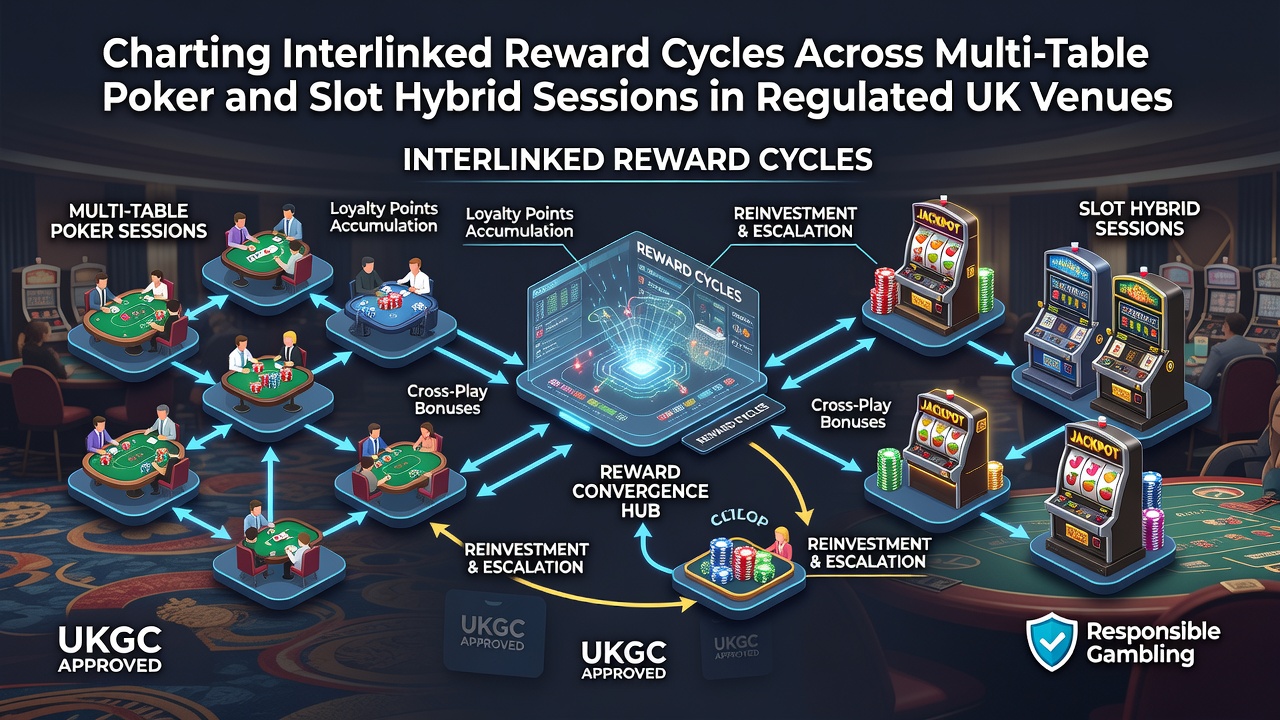
Players in regulated UK venues often shift between multi-table poker and adjacent slot areas, which creates observable patterns where loyalty points earned at one activity feed directly into bonuses available at the other. Data from venue operators shows that these movements generate cycles where initial poker winnings convert into slot credits, and slot sequences in turn unlock table entry perks. Observers note that such interlinked systems rely on integrated player tracking software that updates balances in real time across both game types.
How Reward Points Accumulate Across Game Types
Integrated loyalty platforms record every hand played at poker tables alongside every spin on linked slot machines, then apply tiered multipliers that increase when activity spans both formats within a single session. Research from industry tracking firms indicates that participants who alternate between three or more poker tables and nearby slot banks accumulate points at rates 15 to 20 percent higher than those who remain at one game type. These elevated rates stem from algorithms that reward session diversity rather than volume alone.
Venues in major cities have expanded their systems since 2024 to include hybrid progress bars visible on mobile apps, allowing players to monitor how poker rake contributions combine with slot coin-in totals to reach the next reward tier. Figures from operator reports reveal that November 2026 updates to these apps introduced cross-game streak counters that reset only after 48 hours of inactivity.
Session Flow Patterns Observed in Practice
One documented pattern involves players finishing a poker cash game, converting chips at the cage, and immediately moving to progressive slot banks where the same loyalty card triggers a matched deposit bonus. Studies conducted by European gaming research groups found that this sequence occurs most frequently during evening hours when table minimums drop and slot promotions activate. The transition time between leaving a poker seat and starting slot play averages under four minutes in larger venues.
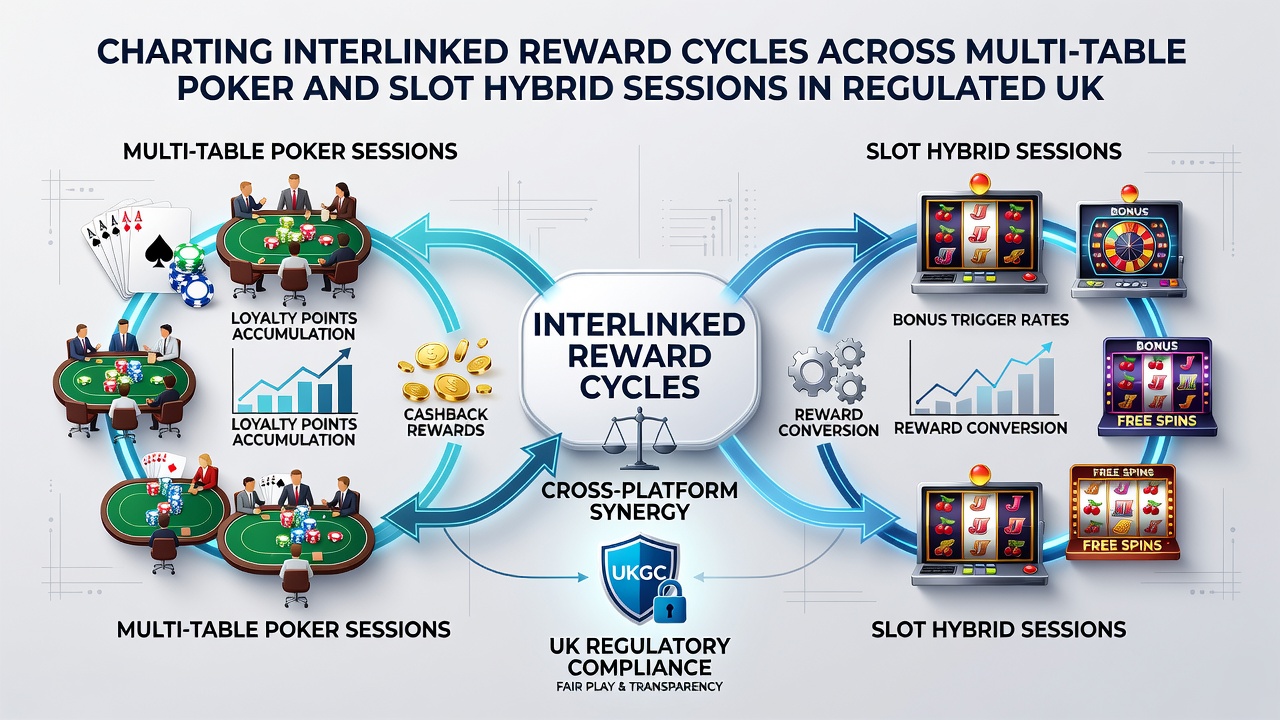
Another pattern emerges when slot jackpots fund re-entry into multi-table poker tournaments. Venue logs show that winners who receive slot payouts above a certain threshold receive automatic tournament credit tokens valid for the same evening. This mechanism keeps participants inside the venue longer and distributes activity across both poker and slot floors.
Data Tracking and Compliance Requirements
Regulated operators must log every point transfer between game categories to meet audit standards set by oversight bodies outside the UK. A report issued by the Canadian Centre on Substance Use and Addiction examined similar hybrid systems in North American markets and documented how unified ledgers reduce discrepancies during compliance checks. Those findings align with practices now standard in UK venues where software timestamps each reward allocation.
Additional analysis from the Australian Institute of Criminology highlights that cross-game reward cycles can be mapped through timestamped transaction data, revealing peak overlap periods between 8 pm and midnight. UK venues apply these mapping techniques to adjust staffing and machine placement without altering regulatory frameworks.
Practical Examples from Venue Operations
Take one mid-sized casino in the north of England that introduced a hybrid rewards pilot in late 2025. Records indicate that participants who completed at least two poker tables followed by 200 slot spins reached the top loyalty tier 30 percent faster than single-game players. The venue adjusted its floor plan so that slot banks sit within 20 metres of the poker area, shortening the physical distance and increasing cycle frequency.
Similar adjustments appear in London properties where digital kiosks display combined poker and slot progress toward monthly milestones. Staff training materials emphasize that these kiosks update every 60 seconds, giving players immediate visibility into how one activity influences the next reward unlock.
Conclusion
Interlinked reward cycles continue to shape how players move through regulated UK venues that offer both multi-table poker and slot options. Tracking software, tier multipliers, and physical layout decisions all contribute to measurable patterns where activity in one format directly influences options in the other. Ongoing data collection by operators and external research bodies provides the factual basis for understanding these cycles as they evolve through 2026 and beyond.